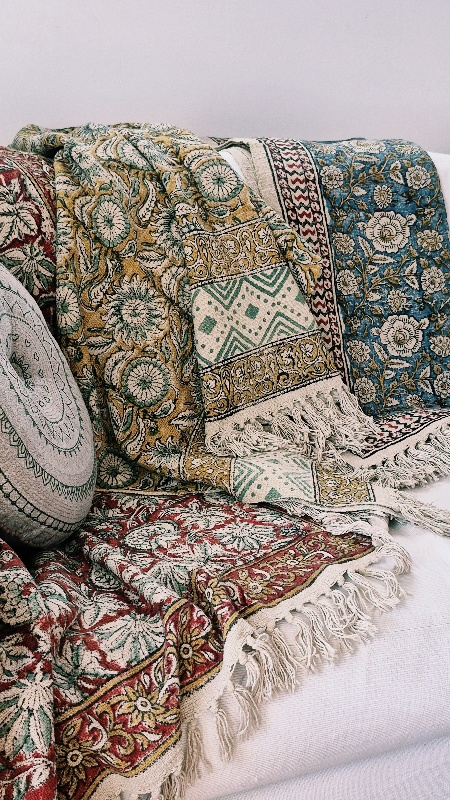
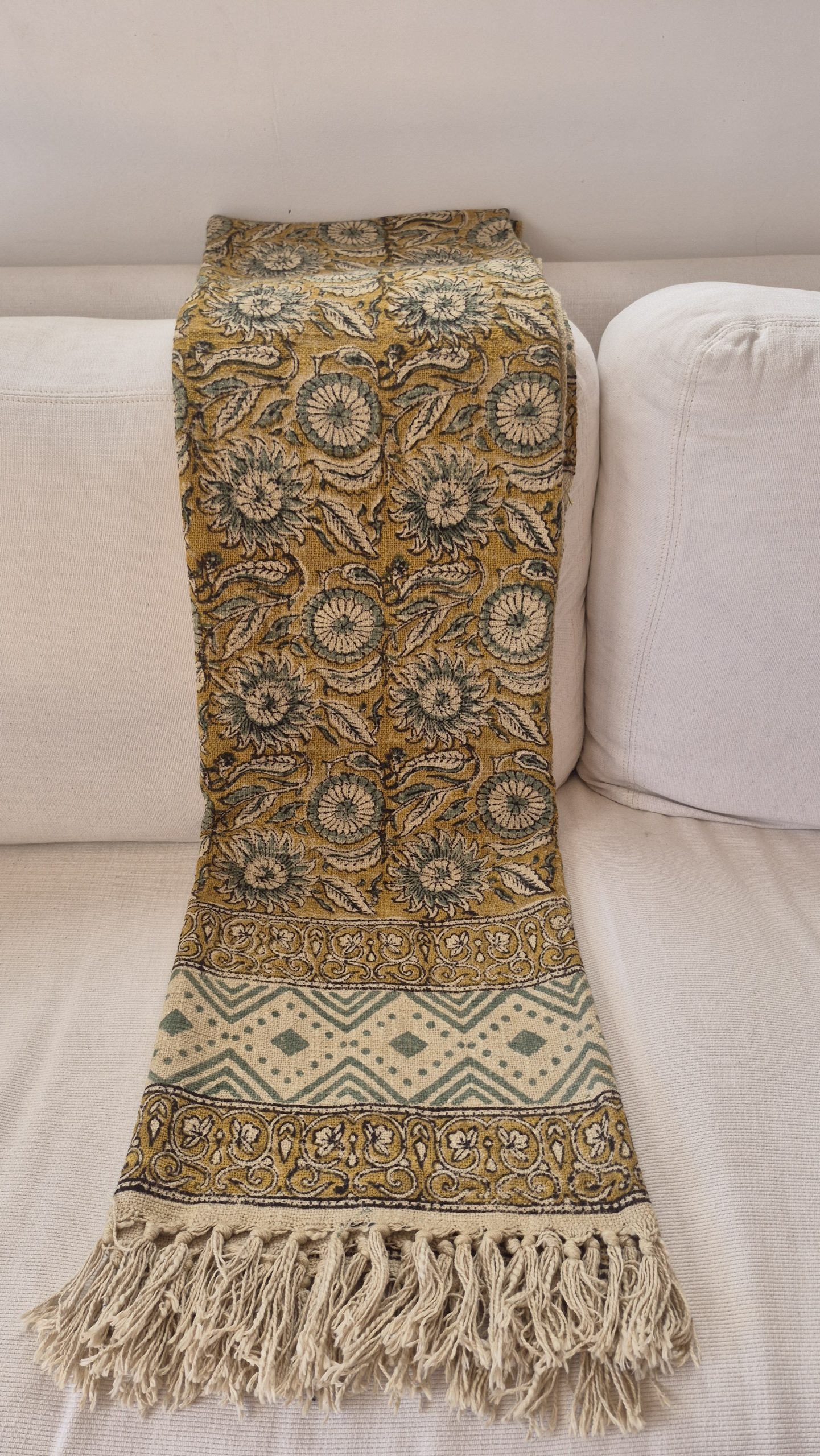
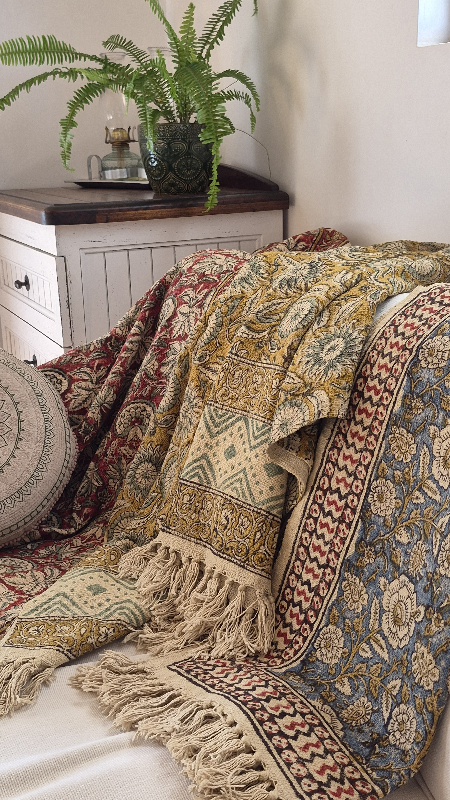
The above phrase refers to a high-quality textile made from Cotton Slub (TNT) that is hand-decorated using traditional Bagru block printing techniques from the Jaipur region of Rajasthan, India.
The term breaks down into these key elements:
-
- Jaipur & Bagru: Refers to the geographic origin. Bagru is a famous artisan village located approximately 30-35 km from Jaipur, known globally for its 450-year-old traditional hand-block printing craft.
- Slub / TNT: “Slub” refers to a specific type of cotton fabric featuring soft, intentional bumps or thickness variations in the yarn. It gives the textile a rustic, organic texture with beautiful, natural draping.
- Block Print: The printing method where master artisans dip intricately hand-carved wooden blocks into dye pastes and manually stamp the design onto the stretched fabric.
Key Characteristics of Bagru Block Prints
-
- Eco-Friendly Dyes: Unlike synthetic mass-production, authentic Bagru prints rely on natural dyes and earth pigments. Deep inky blacks are created from fermented iron/jaggery (syahi), earthy reds from madder root (begar), and yellows from turmeric.
- Unique Design Aesthetic: Unlike the delicate floral patterns of neighbouring Sanganer, Bagru prints are famous for bold geometric shapes, trellis patterns (jaali), waves (leher), and traditional nature-inspired motifs.
- Cream or Dyed Base: The background of a Bagru fabric is usually unbleached, retaining a natural cream colour or a dyed hue rather than a stark white background.
Bagru prints are highly labor-intensive, often utilising the Dabu technique, which involves stamping a mud-resist mixture (made from local clay and gum) onto the fabric. This protects certain areas from absorbing colour when the fabric is submerged in dye baths.